News -
Friday, October 23, 2026
|
Previous Issues
Previous
|
Next
Return To Today's News
|
Chattanooga’s own chainsaw massacre
Partnership working to reverse losses in tree canopy

Chattanooga has a problem that’s been growing in reverse. In one decade, the Scenic City lost nearly 3,000 acres of its tree canopy, an expanse equivalent to 218 Coolidge Parks, research conducted by the University of Tennessee at Chattanooga found. And while the disappearance of a single tree might not attract much attention, the cumulative losses are changing the landscape of a city known for its natural beauty.
A peaceful patch of land to heal the soul
Promised Land Ranch takes shape in the Big Woods

On a drive through Promised Land Ranch, Kelly and Ali Meeks point out a landscape that requires a little imagination. Brush and young trees fill places they envision as pasture. Rocks pulled from a waterline trench lie beside the road. Gaps in the trees offer glimpses toward the Tennessee River Gorge.
Promised Land Ranch to host free leadership seminar
Promised Land Ranch will introduce itself to the Chattanooga community with a free leadership and growth seminar Thursday, Oct. 29, at Liberty Tower in downtown Chattanooga. The half-day event, titled “Built to Last,” will run from 9 a.m. to 1 p.m. and feature speakers from law enforcement, media and business discussing leadership, communication and the challenges of organizational growth.
Just another pretty face? Caricaturist’s work covers more

Dennis Hart has spent 18 years exaggerating people’s features for a living, but the biggest character at Hartsyfartsy’s Caricature Couch might be the man holding the marker. With rectangular glasses perched on a prominent nose, a salt-and-pepper beard and a broad grin that seems perpetually on the verge of laughter, Hart looks at home among the outrageous faces covering the bright orange walls of his tiny studio at the Chattanooga Choo Choo.
More listings don’t translate into more sales

One number rarely tells the whole story of a housing market – and September is a good example. The National Association of Realtors reported another decline in existing home sales nationally, while here in the Chattanooga region we saw more new listings and a larger supply of homes than a year ago. At the same time, pending sales softened, homes took longer to sell and the median sales price held steady.
Calendar: Chattanooga Jazz Festival
The second annual festival will bring a day of free live music to the Chattanooga Choo Choo Gardens Sunday, 11 a.m.-7 p.m. The family-friendly festival will showcase more than 10 local jazz, blues and funk artists, including Zowie Boyd, Jim Crumble, Karen Collins, the Monday Night Big Band and the UTC Jazz Band. An all-day market will feature local arts, crafts, clothing, food and beverages, along with family activities hosted by St. Elmo Stroll. The festival will conclude with the Jared White and Friends Open Jam 7:30-9 p.m. at Wanderlinger Brewing Company, where musicians are invited to bring their instruments and join the free community jam session. Drums, amplifiers, keyboard and microphones will be provided. Information
News briefs: Provident Place shelter to double capacity
Renovations are underway on Provident Place, a new 134-bed facility that will more than double the capacity of Chattanooga’s Maclellan Shelter for Families when it opens in late summer 2027. Located at the former Airport Inn on Old Lee Highway, Provident Place will replace the existing 52-bed shelter at 727 E. 11th St. and offer expanded services to help families experiencing homelessness achieve long-term stability.
Financial Focus: Turn your savings into paychecks in retirement
Margaret had saved diligently for decades with a portion of every paycheck going into her retirement account. Then, the day finally came: She retired. Suddenly, the hardest part wasn’t the saving. It was learning to spend. If that sounds familiar, you’re not alone. Many retirees find the shift from building savings to living off them emotionally difficult, even when they’ve planned carefully. Here are five smart strategies that can help you feel more confident about what’s ahead.
Coach fired for running up the score will find new job

A high school football team in Eugene, Oregon, recently beat its archrival 63-0, which got the coach fired. Not the losing coach. The winner. Good riddance. Some context here: The winning team, Marist Catholic High, had just scored to go ahead 56-0 in the closing minutes of the first half. It then tried an onside kick in an effort to get the ball back quickly and score again. This approach is known by various terms, including “piling on” and “rubbing it in.” And others that I can’t print here.
Knowles has turned around UT’s problematic defense
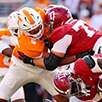
As the fans rushed onto the field after Tennessee’s 26-10 victory over Alabama last weekend at Neyland Stadium, UT defensive coordinator Jim Knowles could be seen dancing on the grass. The normally stoic Knowles then continued showcasing his dance moves once he entered the locker room and was surrounded by players.
Big Jeff wills the Titans to first win of season

No one could really blame Jeffery Simmons if he wanted to exit stage left from Tennessee and find greener pastures the way past teammates like Derrick Henry and Kevin Byard have. But Simmons stays and perseveres. And it appears a big reason for that is moments like Sunday’s when the Titans could have just disintegrated and mailed in another loss in a season where hope has been few and far between.
3-row SUVs: Hyundai Santa Fe vs. Nissan Pathfinder

With prices ballooning everywhere, finding a large family vehicle that fits your budget has become harder than ever. That’s why the Hyundai Santa Fe and Smyrna-built Nissan Pathfinder are appealing. These two three-row SUVs are priced to undercut most competitors by thousands of dollars, at both the top and bottom ends of their lineups. The Santa Fe and Pathfinder are considerably different, however, and those differences result in advantages for both. The auto experts at Edmunds tested them to find out which one is the better buy.
Mark Zuckerberg makes deal with Meta to help him pay California billionaire tax, if it passes
SACRAMENTO, Calif. (AP) — Mark Zuckerberg made a deal with Meta's board to help him pay a proposed California tax on billionaires without losing his ownership stake in the company he founded, according to regulatory filings published this week. The wealth tax is before California voters in the election that concludes Nov. 3. If passed, the measure would levy a one-time 5% tax on the wealth of Californians whose net worth exceeds $1 billion. Zuckerberg is the sixth-richest person in the world with a net worth estimated at more than $220 billion, according to Forbes. That would put his tax liability at more than $11 billion.
Tumbling AI stocks overwhelm markets worldwide as oil prices jump
NEW YORK (AP) — The latest shudder for AI stocks pulled markets sharply lower around the world. The S&P 500 fell 1.2% Thursday for its worst day since July, while the Nasdaq composite tumbled 2.6%. The weakness for tech stocks was so overwhelming that it masked strength for the rest of the market, where the majority of U.S. stocks actually rose.
Supreme Court allows New Hampshire to fully ban student IDs for voting in midterms
WASHINGTON (AP) — The Supreme Court cleared the way Thursday for New Hampshire to fully ban the use of student IDs for voting during the midterm elections. The justices granted a Republican-backed emergency appeal and blocked the use of student IDs as a backup method of identification. The Supreme Court cited a longstanding legal principle that judges shouldn't change voting rules too close to Election Day.
A novel mRNA cancer vaccine helps reduce the chances of melanoma patients' tumors returning
WASHINGTON (AP) — A first-of-its-kind cancer vaccine is significantly reducing the chances that melanoma patients' tumors come back, according to results of a major study released Thursday by drugmakers Moderna and Merck. The vaccine was custom-brewed for each patient to match their tumor. Adding it to a standard post-surgery treatment reduced by 42% the risk of melanoma returning two years after surgery, according to the most advanced study to date of this new strategy for fighting cancer.
US designates helium as a critical material, citing its importance for semiconductors
The U.S. designated helium as a critical material on Friday because it's indispensable for making semiconductors that are essential to energy generation, and the global supply is at risk of disruption, according to the Energy Department. The designation by the Energy Department means that more federal financing will be available for helium producers and that the government will monitor it more closely. Helium is primarily produced as a byproduct of natural gas processing. The United States is the world's largest producer of natural gas and of helium. Qatar and Russia are the other top helium producers.
Europe's killer heat this summer claims 50,000 lives. Climate change blamed for two-thirds of deaths
WASHINGTON (AP) — Blistering record heat in Europe this summer helped kill more than 50,000 people, with nearly two-thirds of that death toll blamed on human-caused climate change, a new study found. Researchers modeled heat-related deaths for different age groups in 854 European cities during repeated heat waves in June, July and August and found that 50,391 people died from warmer temperatures, and of those, 32,619 died because of the extra heat caused by the burning of coal, oil and gas, according to a study in an upcoming issue of Nature Health.
New Pentagon directive bans troops from using nonpublic info to bet in prediction markets
WASHINGTON (AP) — Defense Secretary Pete Hegseth has issued a new directive telling troops they cannot use "nonpublic information" to make bets on prediction markets. "Our enemies watch movements in these markets," Hegseth wrote in a memo dated Tuesday and reviewed by The Associated Press. "When an American Service member, intelligence professional, or other Department civilian engages in a financial transaction on a military outcome, they create a signal."
American Express profits rise; company plans to cut workforce by 5%, or about 3,500 employees
NEW YORK (AP) — American Express profits rose sharply in the third quarter as it transitioned the vast majority of its members to a new, higher-fee Platinum Card while its well-to-do customers continued to spend aggressively. The company also announced its first major job cuts in roughly a decade, telling investors it plans to cut its workforce by 5%, or about 3,500 employees.
US Treasury proposes a rule to crack down on high-tech investments in China, other adversaries
WASHINGTON (AP) — The U.S. Treasury Department proposed a rule Thursday to crack down on American high-tech investments such as supercomputing and artificial intelligence in China, Russia, North Korea and other "countries of concern." The U.S. government has been working for years to deny China and other adversaries investments that could help them boost their military power.
Calley Means, a key MAHA advocate, resigns as a top RFK Jr. adviser
WASHINGTON (AP) — Calley Means, a top adviser to Health Secretary Robert F. Kennedy Jr. and a chief advocate for the Make America Healthy Again movement, resigned from his position with the Trump administration Thursday. In a statement, Means did not say why he was leaving. His departure comes as leading voices in the MAHA movement have expressed discontent with what they say is the Trump administration's lack of progress on a variety of issues, including food security and regulating the weed killer glyphosate.
Deshaun Watson leads another game-winning drive as the Browns beat the Titans 27-24
NASHVILLE (AP) — Deshaun Watson keeps turning in game-winning drives, and his career revival is keeping the Cleveland Browns atop the AFC North. Watson led his fifth winning drive in the fourth quarter this season, connecting with Harold Fannin Jr. on a 36-yard catch-and run that set up Andre Szmyt's 32-yard field goal as time expired, and the Browns beat the Tennessee Titans 27-24 on Sunday for their fifth win in six games.
Cleveland rookie receiver KC Concepcion has breakout performance with 8 catches for 129 yards
NASHVILLE (AP) — Cleveland rookie wide receiver KC Concepcion Jr. showed Sunday exactly why the Browns made him the 24th selection in the NFL draft. The 6-foot receiver turned in the best performance of his young career with eight catches for 129 yards — all of which came in the first half of the Browns' 27-24 win over the Tennessee Titans. He also had three carries for 23 yards, displaying his slithery ability to elude defenders.
O'Reilly, Stamkos each score twice as the Predators beat the Avalanche 6-2
NASHVILLE (AP) — Ryan O'Reilly had two goals and two assists, Steven Stamkos added two goals and an assist and the Nashville Predators beat the Colorado Avalanche 6-2 on Sunday night. Filip Forsberg had a goal and two assists, and Jack Drury also scored for the Predators, who had lost their previous two. Justus Annunen made 19 saves for his first victory of the season.
NBA strikes deals with prediction markets, with eye on integrity and regulations
MIAMI (AP) — The NBA has struck deals that will make Kalshi and Polymarket the league's preferred prediction markets, along with an agreement with a federal agency tasked with regulating those exchanges. Those agreements, announced Monday, are intended to provide "significant integrity protections for NBA-related markets," including limitations on what can be offered on those exchanges, transparency when it comes to suspicious patterns by site users, and banning league and team personnel from making trades related to league events.
Judge rules Maurene Comey, daughter of ex-FBI director, was unlawfully fired by Trump administration
NEW YORK (AP) — Maurene Comey, the daughter of former FBI Director James Comey, was unlawfully fired from her job as a federal prosecutor in New York last year, a federal judge ruled Monday. Judge Jesse M. Furman said that Comey, who was an assistant U.S. attorney for a decade, was illegally fired in July 2025 despite her work on some of the nation's highest-profile cases and consistently receiving "the highest accolades from supervisors and peers alike."
Home sellers are lowering their price and helping buyers to make a deal in a stagnant market
LOS ANGELES (AP) — Not long ago, a homeowner in America might reasonably wager they could sell their home fairly quickly, and for more than their asking price. That's unlikely to be a winning bet now. Across the nation, a stagnant housing market is leaving many sellers in limbo, unable to relocate for a new job, buy their next home to accommodate a growing family, or follow through with other major life decisions that necessitate selling their home.
She voted for Trump every time. Then came cancer and the bills
McALLEN, Texas (AP) — The Ford Expedition rumbled to a stop and Cindy Banda's bedazzled flip-flops landed on the asphalt of the Houston cancer center's vast parking lot. She threaded through the rows of cars, a tally of patients who gather here to sit with chemotherapy needles or lie on radiation machines.
As the US and China form AI blocs, countries are increasingly torn between them
HONG KONG (AP) — With the two leading AI powers, the United States and China, forming their own AI blocs, other countries are maneuvering to harness the strengths of both groupings and avoid losing out. As the rivalry intensifies, experts say the window for countries to be able to choose freely between the two AI superpowers may be narrowing, forcing them to at one point pick between the U.S.-led Pax Silica and the China-inspired World AI Cooperation Organization.
Egypt's parliament authorizes military support for Saudi Arabia to defend against Houthi attacks
CAIRO (AP) — Egypt's parliament on Monday voted to authorize President Abdel-Fattah el-Sissi to provide Saudi Arabia with military support in defending the kingdom against attacks by Iran-backed Houthi rebels. The parliament said in a statement that the vote was meant to give el-Sissi authorization to take necessary measures to back Saudi Arabia in the defense of its territory and sovereignty against an external "aggression."
Catholic bishops regret White House prayer photo with Trump, say it was used politically
Two Catholic bishops have expressed regret about agreeing to a White House meeting that produced a publicly distributed photo of them praying with President Donald Trump. Milwaukee Archbishop Jeffrey Grob, in a statement titled "A Public Apology," said Sunday that he had received many questions and comments — some of them distraught — about the meeting on Thursday which he and 11 other bishops attended.
Trump failed to stop inflation. Now Republicans may pay the price in the midterm elections
WASHINGTON (AP) — President Donald Trump would prefer that voters not worry about inflation. But it's hard for them to ignore. Filling up a basic Ford F-150 truck now costs about $100, up $30 from a year ago. Mortgage rates have jumped to levels that have depressed home sales. And for the past 12 months, consumer prices have risen faster than paychecks, making the average family poorer.
Lula is declared winner of Brazil's election as Bolsonaro rejects results
RIO DE JANEIRO (AP) — Brazil's President Luiz Inácio Lula da Silva, a vocal critic of U.S. President Donald Trump, was reelected Sunday in a result that provides relief to critics of widening U.S. influence in Latin America. With 100% of the vote counted, Brazil's electoral court announced that the soon to be 81-year-old Lula had a lead of nearly 4.4 million votes over opponent Flávio Bolsonaro, giving him 51.8% of the total vote. Bolsonaro quickly refused to concede defeat and asked for the election results to be annulled after an evening of chaos at some polling places that followed a last-minute decision to extend voting by two hours.
Man serving a life sentence for murder slips through a fence and escapes a Tennessee prison
TIPTONVILLE (AP) — A man serving a life sentence for killing his co-worker four years ago has escaped from a prison in northwest Tennessee by slipping through a fence, authorities said. Officials realized Jacob Morley, 28, was unaccounted for around 11:30 p.m. Sunday at the Northwest Correctional Complex in Tiptonville, the Tennessee Department of Correction said in a statement.
Wall Street rises as AI stocks keep swinging
NEW YORK (AP) — U.S. stocks rose Monday amid shaky trading for financial markets worldwide, as AI stocks kept swinging and Brazilian stocks tumbled. The S&P 500 rose 0.7% and more than recovered its losses from last week, pulling within 1.8% of its all-time high set earlier this month. The Dow Jones Industrial Average added 146 points, or 0.3%, and the Nasdaq composite climbed 0.8%.
Judge extends court-ordered block on Trump's renovation plans for public golf course in Washington
WASHINGTON (AP) — A federal judge agreed Monday to extend an order blocking the Trump administration's renovation plans for a century-old public golf course in the nation's capital. U.S. District Judge Ana Reyes issued a preliminary injunction that temporarily bars the government from removing or damaging any additional trees on the East Potomac Golf Course. The administration must give 10 days' notice in writing before making any "irreparable modification" to any "forms or features" of the course while the lawsuit is active.
Libertarians could spoil Republicans' chances in the fight for control of the US Senate
DES MOINES, Iowa (AP) — Republicans are worried that Libertarian candidates could siphon away votes in some of this year's most consequential U.S. Senate elections, potentially costing them control of the chamber. It's a particular concern in Texas, Ohio, Kansas and Iowa, which are bracing for razor-thin contests in which even a few percentage points for a third party can be enough to swing the outcome.
US consumer confidence recovers in October as gas prices eased a bit
WASHINGTON (AP) — Americans' confidence in the economy rebounded somewhat in October as gas prices fell modestly, though they remain much higher than last year at this time. The Conference Board said Tuesday that its consumer confidence index jumped 7.5 points to 91.7 in October from 84.2 last month. September's reading was the lowest in the board's survey since April 2014 and below the lowest level reached during the pandemic.
5 things to watch from the Federal Reserve's next meeting
WASHINGTON (AP) — Federal Reserve policymakers are likely to keep their key interest rate unchanged Wednesday when they finish what may seem like an uneventful meeting. But investors and economists will be looking between the lines of the central bank's statement Wednesday for clues about its next moves and where it thinks inflation is headed.
Polls suggest a tight race between Netanyahu and his main rival. Here's what to know as Israel votes
JERUSALEM (AP) — Israel's election is widely seen as a referendum on the country's longest-serving prime minister, Benjamin Netanyahu, and polling suggests a tight race with his chief rival, former military chief of staff Gadi Eisenkot. Israelis, however, vote not for individuals but for parties, which then form alliances to create a majority coalition. No single party has ever won a majority in parliament, known as the Knesset.
Judge to consider whether California should count 20,000 ballots disputed by Trump administration
LOS ANGELES (AP) — A federal judge in Los Angeles will hear arguments Tuesday afternoon over whether the Department of Justice can bar California from counting the ballots of of some 20,000 people until it can confirm they are U.S. citizens. The hearing before U.S. District Judge David O. Carter comes as voting is underway statewide with a week left before the midterm election concludes Nov. 3. Noncitizen voting has been a key focus of President Donald Trump's administration as U.S. voters decide which party will control Congress for the rest of his term, though available data indicates the illicit practice is exceedingly rare.
Supreme Court won't intervene to allow judges to pause some deportation proceedings
WASHINGTON (AP) — The Supreme Court declined to intervene Tuesday in a dispute over a Biden-era immigration regulation that allowed immigration judges to pause some deportation proceedings. The high court turned down a request from Democratic-led cities who say the rule was used to help crime victims and neglected juveniles and should be revived.
Trump plans to loosen restrictions on methane emissions from oil drilling
BILLINGS, Mont. (AP) — President Donald Trump is expected to announce plans Tuesday to loosen a Biden-era rule that aimed to reduce planet-warming emissions of methane from oil and gas drilling. Trump was to deliver the announcement as he campaigned in Texas, according to an administration official speaking on condition of anonymity because they were not authorized to speak on the record ahead of the official announcement.
Broadcom and other AI stocks lift Wall Street closer to its record
NEW YORK (AP) — Stocks in the artificial-intelligence industry led Wall Street higher on Tuesday, as their yo-yo moves swing back upward. The S&P 500 rose 0.6% and pulled within 1.2% of its all-time high set earlier this month. The Dow Jones Industrial Average added 15 points, or less than 0.1%, and the Nasdaq composite climbed 1.2%.
No clear winner in Israeli election, exit polls suggest, as Netanyahu's fate hangs in the balance
JERUSALEM (AP) — Israel's election ended Tuesday with no clear winner, exit polls indicate, likely setting off weeks of jockeying before a leader is declared. An inconclusive result would leave Israel in political limbo after the country's first national election since Hamas' Oct. 7, 2023, attack. The vote served as a referendum on Prime Minister Benjamin Netanyahu's wartime leadership.
|
|
|
|
|
|